King William the Lion
2024-01-08 00:00:00
King William the Lion, history is full of conflict, diplomacy and determination, and this piece brings his story into focus. You’ll find out how William rose to the Scottish throne, clashed with England, and helped shape the future of medieval Scotland.
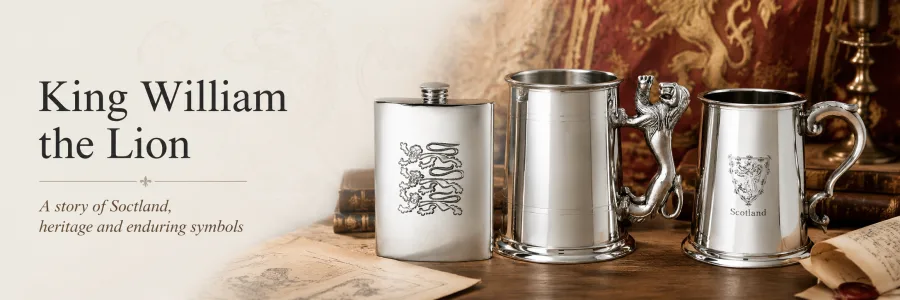
King William the Lion, History and Scotland’s Fight for Independence
When you look at King William the Lion , history, you find far more than a list of battles and treaties. You find a ruler who spent much of his reign trying to protect Scotland’s independence, strengthen royal authority and hold together a kingdom under pressure. William’s story is one of stubborn resolve, hard lessons and lasting influence.
For nearly half a century, he sat on the Scottish throne. That alone makes him one of the most important figures in medieval Scotland. But what truly stands out is the way he responded to setbacks. He was captured, humiliated and constrained by English power, yet he still managed to restore much of his authority and leave a kingdom stronger than he found it.
Who Was William the Lion?
William was born in 1143 into the Scottish royal family. He was the grandson of David I and the younger brother of Malcolm IV. When Malcolm died in 1165, William became king at the age of just 22.
He was known as William the Lion, a name that captured both his royal bearing and his reputation for courage. Medieval kings needed more than a crown. They needed presence, determination and the ability to command loyalty in a world where power was often tested by force. William had all three.
His reign lasted from 1165 to 1214, one of the longest in Scottish history. That length alone gave him time to shape the country in lasting ways. It also meant he ruled through some of the most difficult years of Anglo-Scottish relations.
King William the Lion, history and the struggle for Northumbria
Much of King William the Lion, history is tied to one ambition: recovering Northumbria. This was not just a matter of pride. Northumbria had long been linked to Scottish royal interests, and its loss to England was a major blow.
William inherited this grievance and did not let it go. Early in his reign, he sought opportunities to regain influence there, but Henry II of England was a formidable opponent. In 1157, before William became king, he had already lost the Earldom of Northumbria to Henry II, and that loss shaped the direction of his rule.
From then on, Northumbria remained a symbol of unfinished business. It represented Scottish claims, border politics and the wider struggle to keep English power in check.
The Revolt of 1173–74
One of the defining moments of William’s reign came during the Revolt of 1173–74. This was part of a much larger conflict involving Henry II and his rebellious sons, with support from France.
William saw his chance. He joined the uprising and pushed his own claims while English authority was distracted. It was a bold move, but also a risky one. In medieval politics, timing mattered. So did judgment. William chose confrontation, and for a while it looked as though the balance might shift in Scotland’s favour.
The revolt showed something important about William’s character. He was willing to take risks for Scotland’s interests. He was not content to accept English dominance quietly.
Capture at the Battle of Alnwick
That gamble did not go as planned.
In 1174, during a raid connected to the revolt, William charged ahead at the Battle of Alnwick and was captured by English forces. It was a humiliating setback. A king in chains is never a good look, especially in a period when honour and authority were central to rule.
His capture led to the Treaty of Falaise, which forced him to acknowledge Henry II as his feudal superior. For Scotland, this was a bitter moment. The treaty placed serious pressure on the kingdom and made clear just how vulnerable William had become.
Yet William’s story does not end there. He was not simply defeated and forgotten. Over time, he worked to undo the damage.
Diplomacy, the Treaty of Falaise and recovery
William’s recovery was as much diplomatic as military. He understood that force alone would not solve Scotland’s problems. He needed allies, leverage and patience.
A key turning point came when he successfully negotiated the annulment of the Treaty of Falaise with the help of Pope Celestine III. This was a major political victory. It removed the humiliating condition of English overlordship and restored a measure of independence to the Scottish crown.
That achievement matters. It shows William as more than a warrior king. He was also a shrewd political operator who knew when to fight and when to negotiate.
Military campaigns across Scotland
William’s efforts were not limited to the border with England. He also worked to bring greater control to areas within Scotland itself.
His authority was recognised in Galloway, which had previously been almost independent. He also dealt with serious unrest in Moray and Inverness. These were not small tasks. Maintaining royal authority in medieval Scotland was a constant challenge, especially in the north and west, where local power could be strong and the crown’s reach was less certain.
Through a series of campaigns, William extended Scottish influence into Caithness and Sutherland as well. In doing so, he helped strengthen the reach of the monarchy across a wider territory.
This part of his reign is sometimes overlooked, but it was crucial. A king could not defend Scotland abroad without first securing it at home.
The Auld Alliance and France
William also understood the importance of foreign alliances.
In 1165, he entered into a formal alliance with France, which later became known as the Auld Alliance. This relationship would go on to shape Scottish foreign policy for generations. At its heart, it was a practical response to English pressure. If England was powerful, Scotland needed friends.
William had already shown his willingness to cooperate with Henry II’s wider military efforts in 1158, when he offered assistance in the French wars in the hope of regaining Northumbria. He was rebuffed. That rejection only deepened his resolve.
The alliance with France gave Scotland an important diplomatic counterweight. It was one of the clearest signs that William thought beyond immediate battles and understood the bigger political picture.
What King William the Lion, history tells us about leadership
There is a reason William remains such a notable figure in Scottish history. His reign was full of setbacks, but it was also full of persistence.
He did not win everything he wanted. Northumbria remained out of reach. He suffered a major capture and had to endure the shame of the Treaty of Falaise. But he also restored much of what had been lost, strengthened royal authority within Scotland and built diplomatic links that lasted long after his death.
That mix of failure and achievement makes him interesting. He was not a flawless hero. He was a medieval king operating in a difficult age, making difficult choices. Sometimes he won. Sometimes he did not. But he kept going.
William’s lasting legacy
William died in 1214, after nearly fifty years as king. He was buried at Arbroath Abbey, a monastery he founded. That detail feels fitting. Arbroath would later become associated with some of the most famous expressions of Scottish identity, and William’s connection to it adds a sense of continuity to his legacy.
His reign helped shape the idea of Scotland as a kingdom determined to defend its independence. He strengthened the monarchy, expanded influence in the north and helped set the stage for later generations who would continue that struggle.
In the broader sweep of medieval history, William the Lion stands as a symbol of endurance. He ruled through pressure, conflict and diplomacy, and he left behind a kingdom that was more confident of its own identity.
And that is why King William the Lion , history still deserves attention today. It is a story of power tested, authority challenged and resilience carried through the reign.
If you enjoy stories of Scottish heritage, kings and the enduring symbols of the past, take a look at Pewter World’s handcrafted range for thoughtful gifts with a sense of history.