The Difference Between Ale and Lager
2025-03-14 00:00:00
Ale and lager may both be beer, but they’re brewed in very different ways, and that has a big effect on taste, texture and character. Here we look at the history, ingredients and brewing methods behind each style, plus what you can expect in the glass. A simple guide for anyone who enjoys a proper pint.
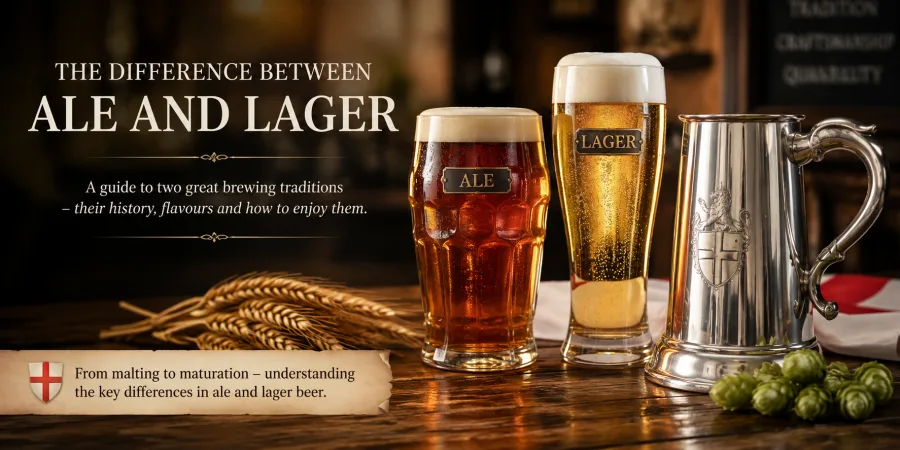
The Difference Between Ale and Lager
Beer has been part of human life for thousands of years. It has travelled through empires, outlasted fashions, and earned its place at the heart of pubs, dinners and celebrations. Today, we’re spoiled for choice, with everything from pale ales to pilsners on offer. But when it comes down to it, two broad styles still dominate the conversation: ale and lager.
They may look similar in the glass, and both are made from the same basic ingredients, but ale and lager are not the same thing. The difference lies mainly in the yeast, the temperature, and the way the beer is fermented and conditioned. Those small changes have a surprisingly big impact on flavour, aroma and finish.
The Basics: Yeast and Fermentation
At the heart of the difference between ale and lager is the type of yeast used.
Ale yeast
Ales are brewed with Saccharomyces cerevisiae, a top-fermenting yeast. It works best at warmer temperatures, usually between 15°C and 24°C. During fermentation, it rises towards the top of the vessel, which is why ale is often called a top-fermented beer.
Because the yeast works more quickly in warmer conditions, ales tend to ferment faster and develop fuller, more expressive flavours.
Lager yeast
Lagers are brewed with Saccharomyces pastorianus, a bottom-fermenting yeast that prefers much cooler temperatures, generally between 2°C and 13°C. This yeast settles lower in the tank as it works, giving lager its name as a bottom-fermented beer.
The cooler fermentation creates a cleaner beer with a more restrained yeast character. Lagers are also given extra time to mature, which helps smooth out the final flavour.
Why Fermentation Time Matters
One of the most noticeable differences between ale and lager is how long each takes to brew.
Ales are usually ready much sooner. In many cases, fermentation can take just a few days to a week. That makes ale a quicker style to produce, and it often gives brewers more room to experiment with bold flavours.
Lagers take patience. They need a longer fermentation and conditioning period, often several weeks or even months. This extended cold storage, known as lagering, allows the beer to settle, clarify and soften. The result is a smoother pint with a crisp, polished finish.
If ale is lively and expressive, lager is calm and precise.
Flavour Profiles: Bold or Clean?
The yeast and fermentation conditions do more than control the brewing process. They also shape the flavour in the glass.
Ale flavours
Ales are often richer, more complex and more varied. Depending on the style, you might find fruity, spicy, earthy or even roasted notes. Warmer fermentation encourages the yeast to produce more esters and phenols, which create those distinctive flavours.
That is why ale can taste so different from one style to another. A pale ale may be bright and hoppy, while a stout can be dark, silky and packed with coffee or chocolate notes. A Belgian ale might bring spice and dried fruit, while an IPA leans into bold citrus, pine or tropical fruit.
Lager flavours
Lagers usually taste cleaner and crisper. The cooler fermentation temperature reduces the production of stronger yeast-derived flavours, so the malt and hops come through more clearly.
Rather than complexity built on yeast character, lager often focuses on balance. You might notice light biscuit malt, gentle sweetness, soft bitterness or a refreshing snap at the end. It is this clarity that makes lager so easy to drink, especially when served cold.
A Brief Look at the History
The story of ale and lager is also a story about brewing history itself.
Ales came first
Ales are the older style by a long way. Beer production goes back thousands of years, with evidence of brewing in ancient Mesopotamia and Egypt as early as 5,000 BCE. Early brewers used wild yeasts and simple methods, long before anyone understood fermentation in scientific terms.
For much of history, ale was the natural choice in places where warm fermentation was easier to manage. In England and Belgium, it became deeply rooted in local drinking culture. Before modern sanitation and refrigeration, beer was often safer to drink than water, so ale played an important role in everyday life as well as in social gatherings.
Lager arrived later
Lager developed more recently, around the 15th century, in Central Europe, especially Bavaria. Brewers discovered that storing beer in cool caves and cellars during the colder months created a cleaner, smoother result. The German word lagern means “to store”, which is where the name comes from.
As brewing techniques improved, and later as refrigeration became widespread in the 19th century, lager became far more popular. It spread across Europe and beyond, eventually becoming one of the most widely consumed beer styles in the world.
Ingredients: Same Foundation, Different Expression
Ale and lager both use the same core ingredients: water, malt, hops and yeast. What changes is how those ingredients are handled.
Water
Water has a bigger influence on beer than many people realise. Its mineral content can affect flavour, mouthfeel and bitterness.
For example, the hard water of Burton-upon-Trent in England is well suited to pale ales, helping to sharpen hop character. By contrast, the softer water of Pilsen in the Czech Republic helped create the clean, delicate profile associated with pilsners. Brewers often adjust their water profile carefully to suit the style they want to make.
Malt
Ales often use a wider range of malts, including roasted and caramelised varieties. These can add sweetness, colour, body and depth. That is part of why ales can feel so varied and characterful.
Lagers usually lean towards lighter malts, such as Pilsner or Vienna malt, to keep the beer bright and uncluttered. The result is a pale, crisp beer with a clean malt backbone.
Hops
Both ale and lager can be hopped in many different ways, but they are often used differently.
Ales frequently put hop flavour and aroma front and centre. Citrus, pine, floral and resinous notes are common, especially in modern styles such as IPA. Lagers tend to favour balance, using hops more subtly to support the malt. Traditional noble hop varieties such as Saaz and Hallertau are prized for their delicate herbal and floral qualities.
Yeast
Yeast is the quiet worker behind every beer, but it plays a huge role in the final taste. Ale yeast tends to create fruity and spicy notes. Lager yeast works more slowly and at cooler temperatures, producing a cleaner, smoother beer. It is a small change with a big payoff.
Brewing Methods: Speed Versus Precision
Ale brewing is generally quicker and often a little more forgiving. The warmer fermentation temperatures mean brewers can move from mash to glass in a shorter time, and the style lends itself to experimentation. Dry hopping, where hops are added during or after fermentation, is especially common in ales and can boost aroma without adding too much bitterness.
Lager brewing is more exacting. Temperature control matters from start to finish, and the cold conditioning stage demands patience. But that patience pays off. Lagering helps reduce off-flavours, improve clarity and create the crisp, refined finish that lager drinkers enjoy.
Modern Brewing and Hybrid Styles
These days, brewers are not always limited by old definitions. Modern craft brewing has encouraged plenty of experimentation, and hybrid styles are now part of the conversation.
Some beers borrow the bold hop character associated with ales while using lager yeast or cooler fermentation techniques. Others aim to combine the smoothness of lager with the fruitier, more expressive side of ale. It all shows how flexible brewing can be when tradition and creativity meet.
Popular Examples of Each Style
If you are trying to get your bearings, it helps to look at a few familiar examples.
Ales
- Pale Ale: balanced, with a mix of malt and hop character, often showing citrus or floral notes.
- India Pale Ale (IPA): known for bold hop flavours, from piney and bitter to juicy and tropical.
- Stout: dark, rich and full of coffee, chocolate or roasted malt character.
- Belgian Dubbel: malty, gently sweet and often layered with dark fruit and spice.
Lagers
- Pilsner: light, crisp and refreshing, with a clean hop bitterness.
- Helles: smooth, malt-forward and subtly sweet.
- Bock: stronger and richer, with a deeper malt profile.
- American Lager: light-bodied, highly carbonated and easy to drink.
Which One Do People Prefer?
Taste is always personal, but geography and brewing history often play a part.
In England and Belgium, ales have long been celebrated for their depth and variety. In Germany and the Czech Republic, lager is deeply woven into beer culture, admired for its precision and purity. In the United States, the craft beer movement has brought renewed interest in both styles, alongside plenty of creative hybrid brews.
The truth is, there is no single winner. Some people enjoy the lively, layered nature of ale. Others prefer the crisp simplicity of lager. Many happily drink both, depending on the occasion, the weather or the food on the table.
Final Thoughts
The difference between ale and lager goes far beyond what happens in the brewhouse. It is about history, climate, ingredients and technique. It is also about mood. Ales can feel bold and expressive, while lagers are often clean, composed and refreshingly straightforward.
Knowing what sets them apart can make that next pint a little more interesting. And once you start paying attention to flavour, yeast and brewing style, you may find you appreciate beer in a whole new way.
Whether you prefer a full-bodied ale or a crisp lager, there is real craftsmanship behind every pour. If you are looking for the perfect way to enjoy it, take a look at Pewter World’s range of handcrafted beer gifts and glassware.
