New to Pewter? Read Our Guide
2026-08-10 00:00:00
Pewter has a long history, a lovely character and a surprising amount of everyday practicality. Here, we explain what it is, how it’s made, and why it has remained such a popular choice for gifts, keepsakes and traditional tableware.
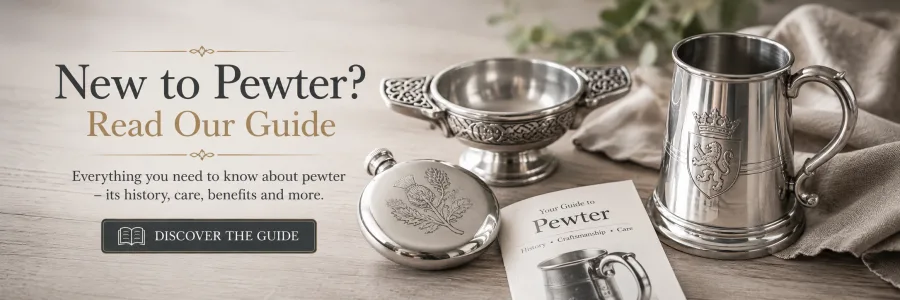
If you’re new to pewter, you’re in good company. It’s one of those materials people often recognise before they can fully explain it — familiar, handsome and quietly distinctive. In this guide to what pewter is, how it’s made and why it has been used for centuries, we’ll walk you through the basics in a simple, friendly way.
So, what exactly is pewter?
Pewter is a metal alloy, which means it’s made by combining tin with small amounts of other metals. Traditionally, it was made with lead as well, but modern pewter used for gifts and tableware is lead-free and much safer for everyday use.
What gives pewter its appeal is its soft, silvery look. It has a gentle sheen rather than a bright mirror finish, which makes it feel warm and understated. Some people describe it as classic, others as timeless. We’d say both are true.
You’ll often find pewter used for tankards, hip flasks, goblets, plates, and decorative gifts. It suits engraving beautifully too, which is one reason it remains such a popular choice for personal presents.
How pewter is made
The making process is part craft, part precision. At its heart, pewter begins as metal that is heated until it becomes liquid, then poured into a mould. From there, the item is allowed to cool and set into shape.
Once the piece has been cast, it’s removed from the mould and cleaned up by hand. That stage matters a great deal. It’s where the surface is refined, any excess is taken away, and the item starts to take on its finished character.
Depending on the item, there may be further work such as polishing, fitting handles or bases, and preparing the surface for engraving. The result is something that feels substantial in the hand, but still elegant.
Because pewter is softer than many other metals, it can be shaped into fine detail. That’s one of the reasons it lends itself so well to decorative pieces and traditional giftware. A good craftsperson can bring out a lovely depth in the metal.
Why it has lasted for so long
Pewter has been used for centuries because it sits in a very useful middle ground. It looks refined, it is durable enough for regular use, and it doesn’t demand constant fuss.
Historically, it was a practical choice for household items. Before modern manufacturing, metals like silver were expensive and out of reach for many people. Pewter offered a far more accessible alternative while still giving a touch of quality.
It was especially common for dining ware, mugs and plates, and over time it became part of everyday life across homes, inns and taverns. Even now, that heritage is part of its charm.
There’s also something comforting about materials that have stood the test of time. Pewter has never needed to shout for attention. It has simply kept doing what it does well.
What makes it such a good choice today
Although pewter has deep historical roots, it still feels relevant now. In fact, that mix of old-world character and modern practicality is exactly what many people love about it.
One of its biggest strengths is versatility. A pewter piece can be formal or relaxed, traditional or contemporary. It works beautifully as a gift for birthdays, weddings, anniversaries, retirements and special milestones.
It also ages well. Rather than looking worn out, pewter tends to develop a softer, more characterful appearance over time. Many owners enjoy that sense of patina, because it makes the item feel lived-in and personal.
Another benefit is that pewter is easy to live with. It does not need constant polishing in the same way some other metals do, and a simple wipe is often all that’s required to keep it looking smart.
For engraved gifts, it’s particularly appealing. The metal takes lettering and designs clearly, which means a personalised piece can feel beautifully made and genuinely thoughtful.
How to look after pewter
Caring for pewter is refreshingly straightforward. That’s part of its everyday appeal.
For general cleaning, warm water and a soft cloth are usually enough. If needed, a little mild washing-up liquid will help remove fingerprints or marks. After that, dry it gently to avoid water spots.
A few things are worth avoiding. Harsh abrasives, scouring pads and strong chemical cleaners can damage the surface. Pewter is not a material that likes rough treatment.
If your piece has a polished finish, you may want to give it the occasional gentle buff. If it has a more traditional satin appearance, you may prefer to leave it alone and let its natural character show through.
As with any treasured item, a little care goes a long way. Treat it kindly and it will reward you with years of use.
Choosing a pewter piece as a gift
If you’re thinking of buying pewter for someone special, you’re choosing something with real thought behind it. It feels a step above the ordinary, without becoming overly formal.
That makes it well suited to people who appreciate craftsmanship, tradition or a gift with a story behind it. A tankard might be perfect for a milestone birthday. A hip flask can make a handsome keepsake. A goblet or plate can mark a wedding, christening or retirement in a memorable way.
Personalisation adds even more meaning. A name, date or short message turns a well-made item into something that will be kept and remembered.
And because pewter has such a long history, it naturally carries a sense of occasion. It feels considered. It feels lasting.
Pewter has earned its place over many centuries for good reason. It is attractive without being flashy, practical without being plain, and traditional without feeling old-fashioned. Once people get to know it, they often understand why it has remained so loved for so long.
If you’d like to explore the different styles and gift ideas we offer, take a look at Pewter World’s range and see what catches your eye.