Pewter Hip Flasks from Sheffield
2021-04-15 00:00:00
Take a closer look at the rich history behind Sheffield, hip flasks and the pewter craftsmanship that helped shape both. From the city’s metalworking heritage to the rise of the pocket flask, this piece explores why these elegant little vessels still hold such appeal today.
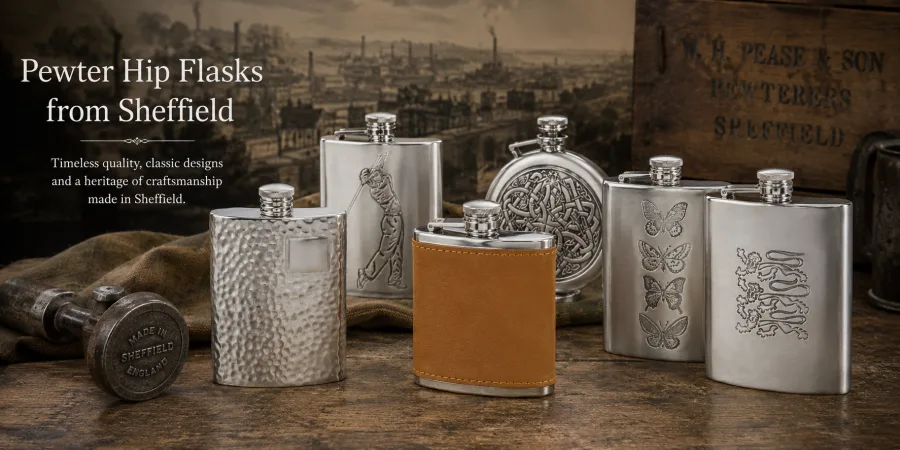
Sheffield, Hip Flasks and the Story of Pewter Craftsmanship
Few accessories have kept their charm quite like the pewter hip flask. Compact, practical and quietly stylish, it has long been associated with good company, special occasions and a certain old-world elegance. When people talk about Sheffield, Hip Flasks, they are really talking about a broader story: one of skilled metalworkers, traditional techniques and a city whose name became closely linked with quality craftsmanship.
Sheffield has long been known for its metalworking heritage, and pewter has played an important part in that story. Over time, the city’s artisans helped turn simple drinking vessels into finely made keepsakes. Today, the pewter hip flask remains a much-loved object, valued just as much for its history and character as for its usefulness.
The Origins of Pewter in Sheffield
To understand the appeal of Sheffield hip flasks, it helps to start with the city itself. Sheffield, in South Yorkshire, has been associated with metalworking for centuries. Its reputation was built on skill, precision and an ability to produce items that were both durable and attractive.
Pewter, an alloy made mainly from tin, was especially well suited to this kind of work. It is soft enough to shape and decorate, yet strong enough for everyday use. That combination made it ideal for flasks, tankards, plates and other household items that needed to be practical without losing their sense of style.
By the 17th century, skilled craftsmen in Sheffield were already producing pewterware to a high standard. Over time, their methods improved, their designs became more refined, and the city developed a strong identity in the world of metalwork. Access to transport routes and industrial growth also helped Sheffield become a natural centre for production.
How the Hip Flask Became Popular
The hip flask did not appear overnight. Its roots can be traced back to earlier drinking vessels, including pilgrim bottles and leather-covered metal containers used to carry spirits when travelling. These early forms were useful, but it was during the 18th and 19th centuries that the modern hip flask began to take shape.
As travel became more common and social customs evolved, people wanted something smaller and easier to carry. The hip flask answered that need neatly. It was compact, curved to fit comfortably against the body, and simple to tuck away in a pocket or coat.
The Industrial Revolution helped push its popularity even further. Improved production methods made pewter more accessible, and flasks could be made more efficiently without losing their appeal. Sheffield’s craftsmen were well placed to meet this demand. They produced pieces that balanced form and function beautifully, giving the hip flask a place among the most desirable personal accessories of the time.
For gentlemen, soldiers and outdoor enthusiasts, the hip flask offered convenience and a touch of refinement. It was suitable for sporting days, travel, celebrations and private toasts shared with friends. That versatility helped it become a lasting favourite.
Sheffield, Hip Flasks and Traditional Craftsmanship
What set Sheffield hip flasks apart was the quality of the workmanship. These were not simply containers. They were carefully made objects, shaped and finished by hand with real attention to detail.
Sheffield craftsmen were known for their patience and pride in their work. A good pewter flask needed more than a pleasing shape. It needed clean lines, a smooth finish and, often, decorative touches that made it distinctive. Engraving was especially important. Monograms, family crests, initials and patterned borders gave each flask a more personal feel.
Some flasks were decorated with hunting scenes, wildlife or country motifs, reflecting the lifestyles of the people who owned them. Others were more understated, appealing to those who preferred simplicity. Whatever the design, the result was usually something that felt special.
Traditional production methods played a major role in that finish. Casting was used to create the basic form. Spinning helped shape the metal into a hollow vessel. Then came the hand-finishing: filing away rough edges, polishing the surface and adding any engraving or detailing. It was this final stage that often made the difference between an ordinary item and one with real character.
Why Pewter Hip Flasks Still Appeal Today
Although the hip flask is no longer a daily necessity for most people, it has never really gone out of style. In fact, its appeal has broadened. Today, people are drawn to pewter hip flasks for many reasons: their traditional look, their durability, their gift value and their connection to craftsmanship.
They are often chosen for weddings, retirements, birthdays and anniversaries. A pewter flask feels thoughtful and enduring, especially when engraved. It is the sort of gift that can be kept for years, used on special occasions and then passed on.
Collectors also value Sheffield hip flasks for their historical interest. Vintage examples can reveal a great deal about changing tastes, manufacturing methods and decorative trends. Some are treasured because of the maker’s mark. Others stand out because of their unusual shape, engraving or provenance. Each one carries a sense of history.
There is also something appealing about the flask itself as an object. It is small, but never insignificant. It fits neatly in the hand, sits comfortably in a pocket and has a reassuring weight to it. Pewter adds to that feeling, giving the flask a traditional finish that looks and feels right.
A Living Heritage in Sheffield
One of the most pleasing things about the story of Sheffield, Hip Flasks is that it is not just a tale from the past. The city’s heritage in metalwork continues to influence modern pewter production, keeping traditional skills alive for a new audience.
Contemporary artisans still draw on techniques that have been used for generations, while also adapting designs to suit modern tastes. Some flasks are more minimal in style. Others keep a classic look, with room for engraving or presentation presentation-style finishes. The balance of old and new is part of what makes Sheffield’s connection to pewter so enduring.
That living heritage matters. It means the story is still being written, not preserved behind glass. Every carefully made flask carries something of that tradition forward.
The Lasting Appeal of Sheffield Pewter
Sheffield’s reputation was built on skill, consistency and craftsmanship, and pewter hip flasks remain a fine example of that legacy. From their origins in traditional metalworking to their place in modern gifting and collecting, they continue to hold a special appeal.
Part of that appeal lies in their usefulness. Part lies in their elegance. But much of it comes from the sense that they are made with care. A well-made pewter flask feels personal, timeless and quietly distinctive. It is a small object with a big story.
Whether you are drawn to the history, the craftsmanship or the simple pleasure of owning something beautifully made, Sheffield hip flasks have plenty to offer. And if you are looking for a piece that blends tradition with everyday charm, Pewter World has a range worth exploring.